
Carbomer 940 Polymer
Material
•
Studio

Important Links
 Safety Operating Procedure
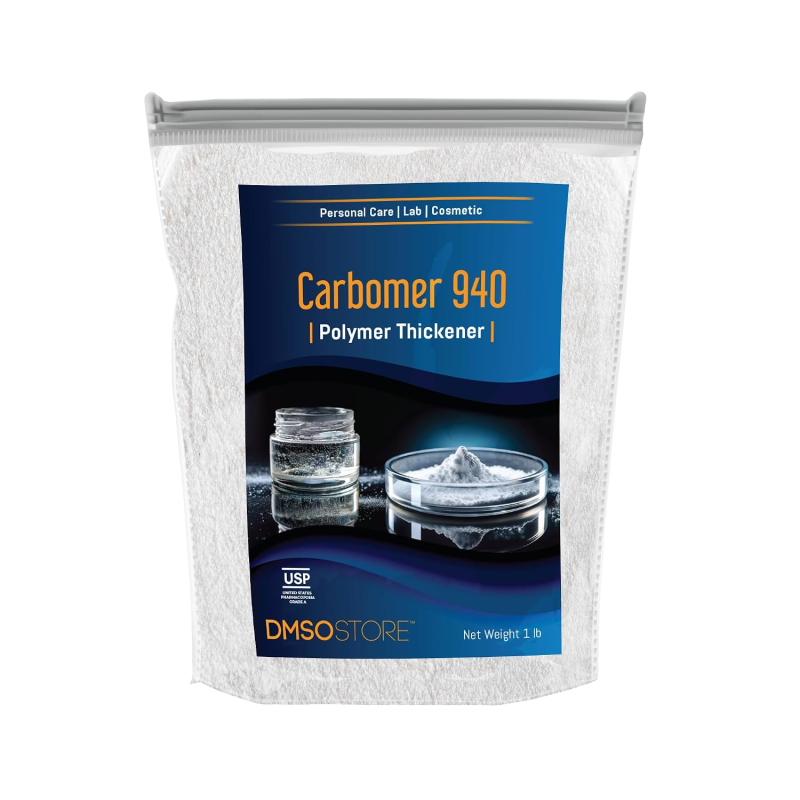
Carbomer 940 is a high molecular weight crosslinked poly(acrylic acid) polymer used as a rheology modifier, thickening agent, and gel-forming material. When dispersed in water and neutralized with a suitable base (e.g., triethanolamine or sodium hydroxide), it forms transparent, high-viscosity gels with yield stress behavior.
Carbomer 940 is used for rheology research, soft material experimentation, cosmetic and biomedical prototyping, and the formulation of model non-Newtonian fluids. It is particularly valuable for creating reproducible shear-thinning gels and yield-stress materials for sensing and fabrication experiments.
Specifications
- Material: Crosslinked poly(acrylic acid)
- Grade: USP
- Appearance: Fine white powder
- Package Size: 1 lb (16 oz)
- Solubility: Swells and disperses in water; requires neutralization to form a gel
- Neutralizers: Triethanolamine (TEA), Sodium Hydroxide (NaOH), Potassium Hydroxide (KOH)
- Primary Uses: Thickener, rheology modifier, suspension stabilizer, gel former
Hazards
- Fine powder may cause eye and respiratory irritation.
- Dust generation may irritate the nose and throat.
- Spilled powder becomes extremely slippery when wet.
- Avoid inhalation of airborne particles.
- Neutralization with strong bases should be performed carefully.
Things to Avoid
- Do not inhale powder.
- Do not add large amounts directly into water without agitation.
- Do not expose container to humidity.
- Do not neutralize rapidly with concentrated base.
- Do not dispose of concentrated polymer powder down sinks.
- Do not contaminate the stock container with wet utensils.
Safety Checks
- Verify container is properly labeled and sealed.
- Inspect powder for moisture contamination or clumping.
- Ensure weighing area is clean and dry.
- Prepare neutralizing agents before beginning formulation.
- Use adequate ventilation when handling dry powder.
Operational Checks
- Add powder slowly while stirring to minimize clumping.
- Allow sufficient hydration before neutralization.
- Neutralize gradually while monitoring pH.
- Mix until a homogeneous gel is obtained.
- Record formulation concentrations and pH for reproducibility.
Cleanup
- Wipe spills using damp disposable towels to prevent airborne dust.
- Clean balances and work surfaces after weighing.
- Dispose of waste according to laboratory procedures.
- Reseal container immediately after use.
- Store in a cool, dry location away from moisture.