
Digital Overhead Laboratory Stirrer

Important Links
 Safety Operating Procedure
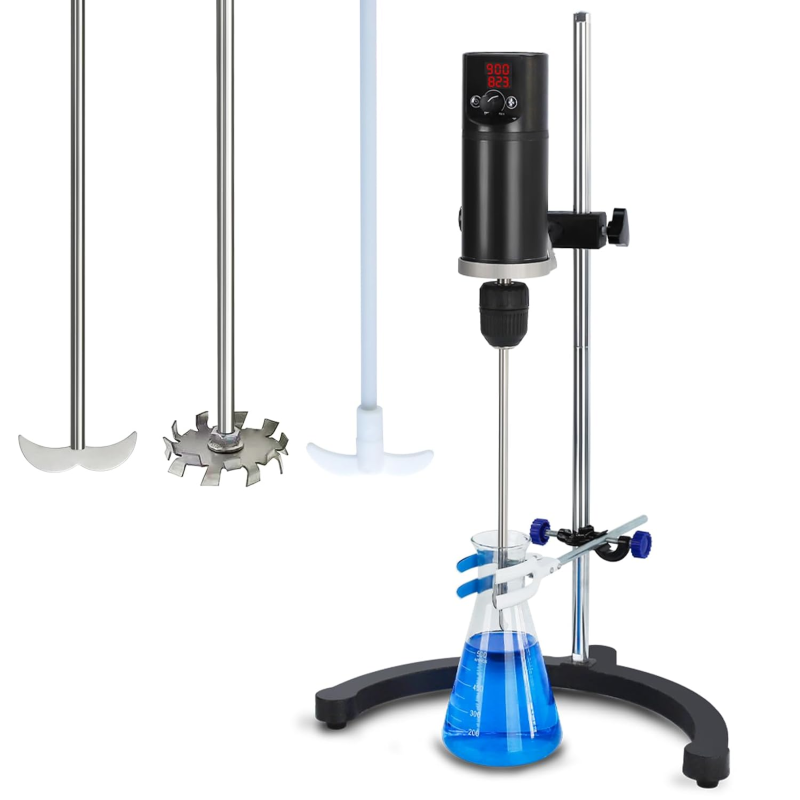
The Digital Overhead Laboratory Stirrer is a variable-speed mixer designed for blending low- to high-viscosity liquids that cannot be effectively mixed using magnetic stirrers. Unlike magnetic stirring, the overhead stirrer provides high torque and direct mechanical agitation, making it suitable for suspensions, gels, emulsions, polymer solutions, ceramic slurries, silicone formulations, and other viscous materials.
Within the Hybrid Atelier, this mixer is used for rheology research, materials formulation, ceramics, hydrogel preparation, conductive materials, cosmetics research, and experimental fabrication workflows. The adjustable speed and interchangeable stirring impellers enable consistent mixing across a wide range of container sizes and material viscosities.
Specifications
- Motor Power: 160 W
- Motor Type: DC permanent magnet motor
- Mixing Capacity: Up to 40 L
- Speed Range: 100–2000 RPM
- Maximum Viscosity: 10,000 mPa·s (cP)
- Maximum Torque: 40 N·cm
- Display: LCD digital speed and timer
- Speed Accuracy: ±1%
- Height Adjustment: 11.8–23.5 in
Included Accessories:
- Stainless steel impeller
- Dispersion disk
- PTFE stirring rod (for corrosive materials)
- Adjustable support stand
- Vessel clamp
Hazards
- Rotating shaft and impeller
- Pinch and entanglement hazards
- Splashing of chemicals or suspensions
- Glassware breakage
- Electrical hazards from liquid spills
- Exposure to hazardous or corrosive chemicals
- Unexpected movement of unsecured containers
Things to Avoid
- Do not operate without securely clamping the vessel.
- Do not exceed the maximum mixing capacity or viscosity.
- Do not immerse the motor housing in liquids.
- Do not adjust the impeller while it is rotating.
- Do not use damaged or bent stirring shafts.
- Do not allow the impeller to strike the container walls.
- Do not leave the stirrer unattended during extended mixing operations.
- Do not use incompatible impellers with highly corrosive materials unless using the PTFE-coated stirring rod.
Safety Checks
- Verify the stirrer is securely mounted to the stand.
- Confirm the impeller is firmly attached.
- Ensure the mixing vessel is properly clamped.
- Inspect power cord and controls for damage.
- Verify the impeller is centered and clear of the container walls.
- Confirm the selected impeller is appropriate for the material.
- Check that all fasteners are securely tightened.
Operational Checks
- Begin mixing at the lowest practical speed.
- Increase speed gradually to minimize splashing and vortex formation.
- Monitor the vessel for vibration or movement.
- Keep hands, clothing, and cables clear of rotating components.
- Do not exceed the rated viscosity or mixing volume.
- Stop the stirrer before changing impellers or repositioning the vessel.
- Immediately stop operation if excessive vibration, noise, or overheating occurs.
Cleanup
- Reduce speed to zero before powering off.
- Wait for the impeller to stop completely.
- Remove and clean the stirring shaft and impeller using appropriate solvents.
- Wipe down the stand and motor housing.
- Inspect components for residue or corrosion.
- Return all stirring rods and accessories to storage.
- Store the stirrer with the shaft removed or positioned safely.