
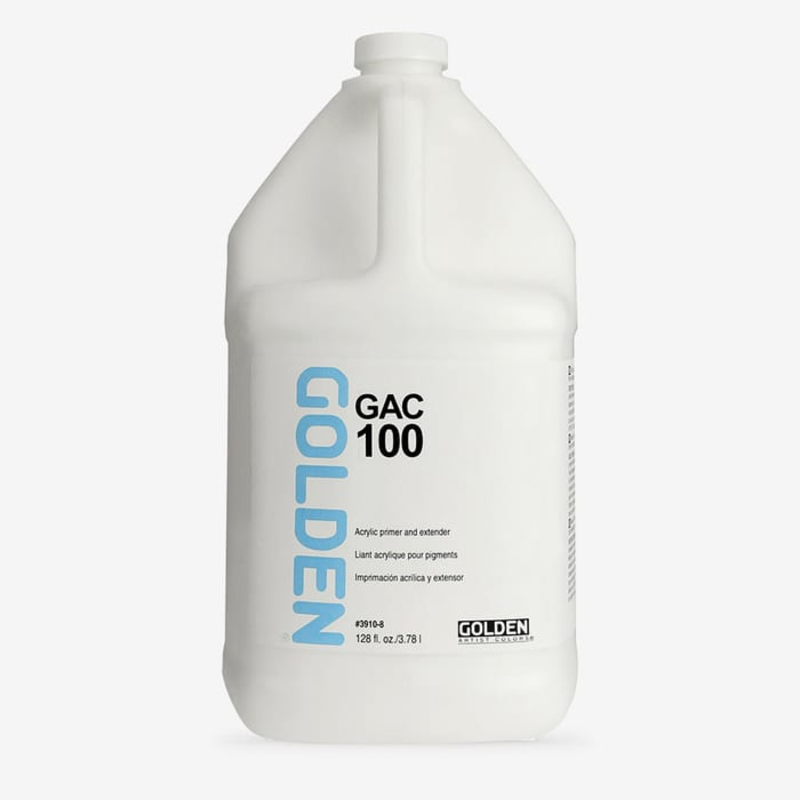
GAC 100 - Acrylic Primer and Extender
Material
•
Studio

Important Links
 Safety Operating Procedure
GAC 100 is a thin, translucent, gloss medium. Useful for thinning or extending colors as well as increasing flexibility. Wets out solids more readily than other polymers and is useful for creating homemade paints. GAC 100 provides basic protection from Support Induced Discoloration (SID), for better protection
Hazards
- Eye irritation: splashes may cause temporary irritation; avoid direct eye contact
- Skin contact: prolonged or repeated exposure may cause mild irritation or dryness
- Spray inhalation: avoid breathing mist or aerosol; use adequate ventilation when spraying
- Slippery when spilled: liquid material can make floors and work surfaces very slippery
- Ammonia-containing formulation: contains a small amount of ammonium hydroxide and may have a mild ammonia odor
- Environmental release: avoid pouring excess material or cleanup waste into drains or waterways
Things to Avoid
- Avoid direct eye contact and prolonged skin contact
- Avoid breathing spray, mist, or aerosol
- Avoid spraying without adequate ventilation
- Avoid leaving spills on floors or walking surfaces
- Avoid contaminating the main container with dirty tools
- Avoid leaving the container open when not in use
- Avoid extreme heat, freezing conditions, and unnecessary temperature fluctuations during storage
- Avoid releasing excess material into drains or waterways
Safety Checks
- Confirm the container is clearly labeled and securely closed
- Check for leaks, damaged packaging, or dried material around the cap
- Ensure the work area has adequate ventilation
- Have safety glasses and nitrile gloves available before use
- Keep the work surface clear so spills can be contained quickly
Operational Checks
- Stir gently before use if the material has separated
- Use clean, dry tools and containers to avoid contamination
- Dispense only the amount needed for the task
- Keep the main container closed when not actively dispensing
- Avoid vigorous mixing that may create unnecessary splashing or foam
- Use additional ventilation when spraying or producing a fine mist
Cleanup
- Wipe up small spills immediately — wet acrylic medium can make floors slippery
- Absorb larger spills with an inert absorbent material and collect for proper disposal
- Clean tools with water promptly before the acrylic dries
- Wipe down work surfaces after use
- Allow contaminated reusable tools to be thoroughly cleaned before storage
- Wash hands after cleanup
- Do not pour excess material or concentrated cleanup waste into drains