
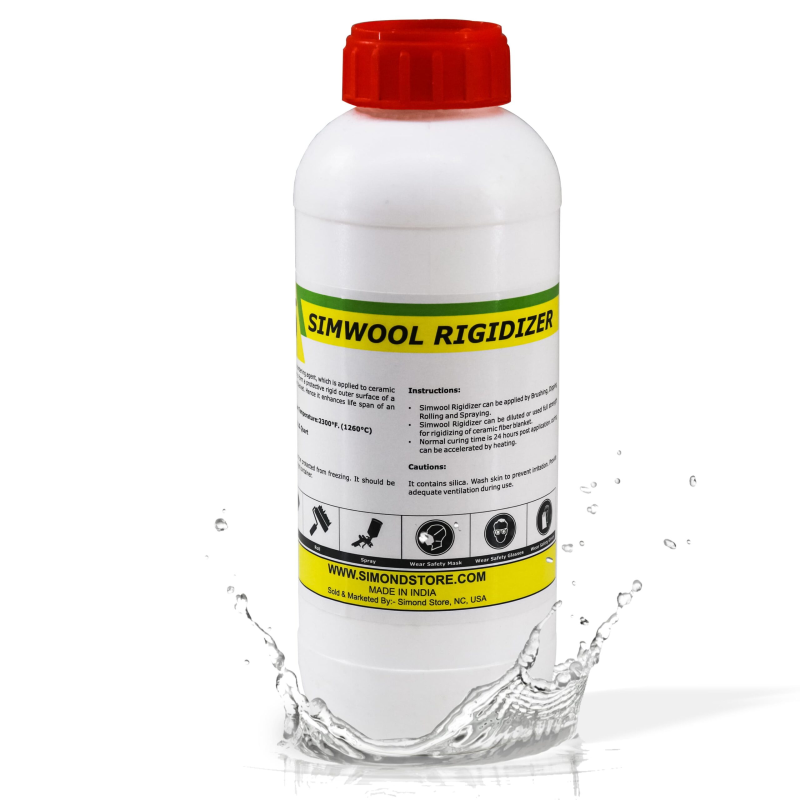
Simwol RigiDizer

Important Links
 Safety Operating Procedure
**What is Ceramic Fiber Rigidizer?
This rigidizer is a colloidal silica compound used for surface coating of ceramic fiber blankets exposed to high-velocity gases, and for surface treatment of ceramic fiber products to increase the surface hardness, resistance to erosion, and thermal shock resistance.
***Increase Surface Hardness & Erosion Resistance
When this rigidizer coating compound is applied to the surface of ceramic fiber products, it increases the surface hardness of ceramic fiber products such as blankets and boards. Also, it offers resistance to erosion and thermal shock.
***Improves Thermal Efficiency
Ceramic fiber materials coated with rigidizer allow insulation to the high temperature up to 2300F and reflect more heat, thus improving the thermal efficiency of ceramic fiber material, giving you better results.
***Easy To Apply
because of its low viscosity, it can be applied to ceramic fiber material easily by brushing, spraying, or dipping. It takes around 24 hours of curing time post its application to ceramic fiber materials.
***Reduces Spread of Harmful Particles
This rigidizer when applied provides firmness and volume stability to the surface, preventing the particle to fall from the surface and reducing the spread of harmful airborne particles that may impact your health
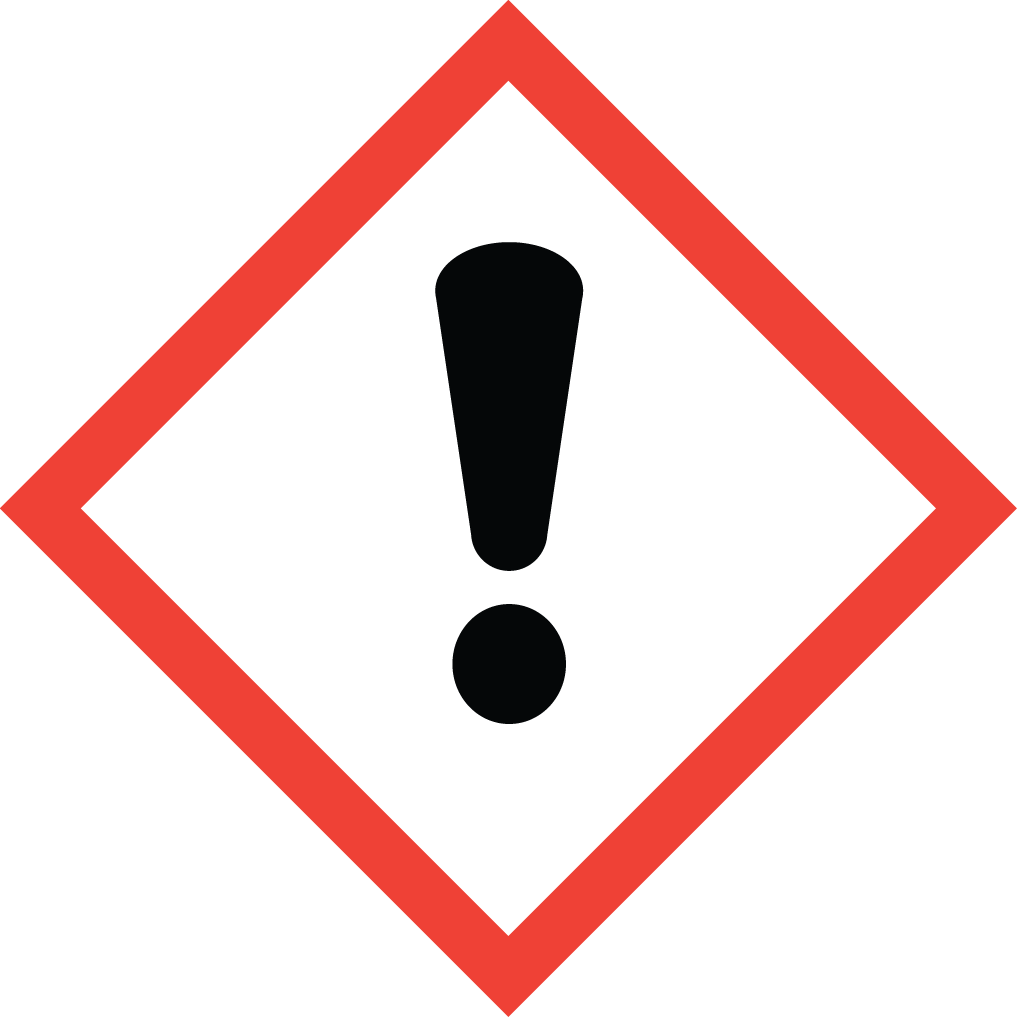
Hazards
Eye irritation: liquid splashes may irritate the eyes; rinse exposed eyes thoroughly with water.
Skin irritation: prolonged or repeated contact may cause mild irritation. Avoid direct skin contact and wash exposed skin after handling.
Inhalation irritation: avoid breathing aerosols, spray mist, or dust generated from dried rigidizer.
Alkaline liquid: the material has a pH of approximately 9.75 and may irritate sensitive skin or eyes.
Dried silica dust: dried material can produce airborne particulate when scraped, sanded, cut, or otherwise disturbed.
Spray/aerosol hazard: spraying can create respirable mist. Use adequate local ventilation and appropriate respiratory protection.
Slip hazard: spilled liquid can create a slippery work surface. Clean spills promptly.
Chemical incompatibility: avoid contact with strong acids; the SDS states that strong-acid contact may generate heat, splattering, boiling, or irritating/toxic vapors.
Freeze sensitive: do not allow the material to freeze.
Non-flammable: the product is listed as non-flammable and non-combustible.
Things to Avoid
- Avoid contact with eyes and prolonged skin contact.
- Do not ingest.
- Do not breathe spray mist, aerosols, or dust from dried material.
- Do not spray without appropriate ventilation and respiratory-protection controls.
- Do not dry sweep or use compressed air to remove dried residue.
- Do not mix with strong acids.
- Do not allow the product to freeze.
- Avoid direct sunlight and excessive heat during storage.
- Do not leave the container open when not in use.
- Do not reuse empty product containers.
Safety Checks
- Inspect the container for leaks, cracks, or damage before use.
- Verify the container is clearly labeled and the lid closes securely.
- Check that the material has not frozen or visibly deteriorated.
- Confirm adequate ventilation before application.
- Wear safety glasses, gloves, and protective clothing.
- If spraying, confirm appropriate local exhaust ventilation and respiratory-protection requirements before beginning.
- Ensure the work surface is clean, stable, and protected against spills.
- Keep incompatible chemicals, particularly strong acids, away from the work area.
Operational Checks
- Ensure the ceramic-fiber or refractory surface is clean and free of oil, grease, dust, and other contaminants.
- Apply only the amount needed using a brush, roller, dipping method, or approved spraying setup.
- Avoid splashing and unnecessary generation of mist or aerosol.
- Keep the container closed when material is not being dispensed.
- Avoid touching the face or eyes while wearing contaminated gloves.
- Allow the coated material to dry/cure completely before further processing.
- Normal room-temperature curing is approximately 24 hours; curing time may depend on coating thickness and environmental conditions.
- Avoid disturbing dried coating in ways that generate airborne dust.
Cleanup
- Clean tools and application equipment promptly before the rigidizer dries.
- Wipe or wet-clean small spills immediately.
- Avoid dry sweeping dried silica-containing residue.
- Use wet-cleaning methods or an appropriate vacuum when cleaning dried material.
- Do not use compressed air to blow dried residue or dust from surfaces.
- Place collected waste in a closed container or bag for disposal.
- Wash reusable tools and work surfaces after use.
- Remove contaminated gloves and wash hands thoroughly with soap and water.
- Keep the original container tightly closed after use.
- Dispose of waste according to applicable laboratory, university, local, state, and federal requirements.